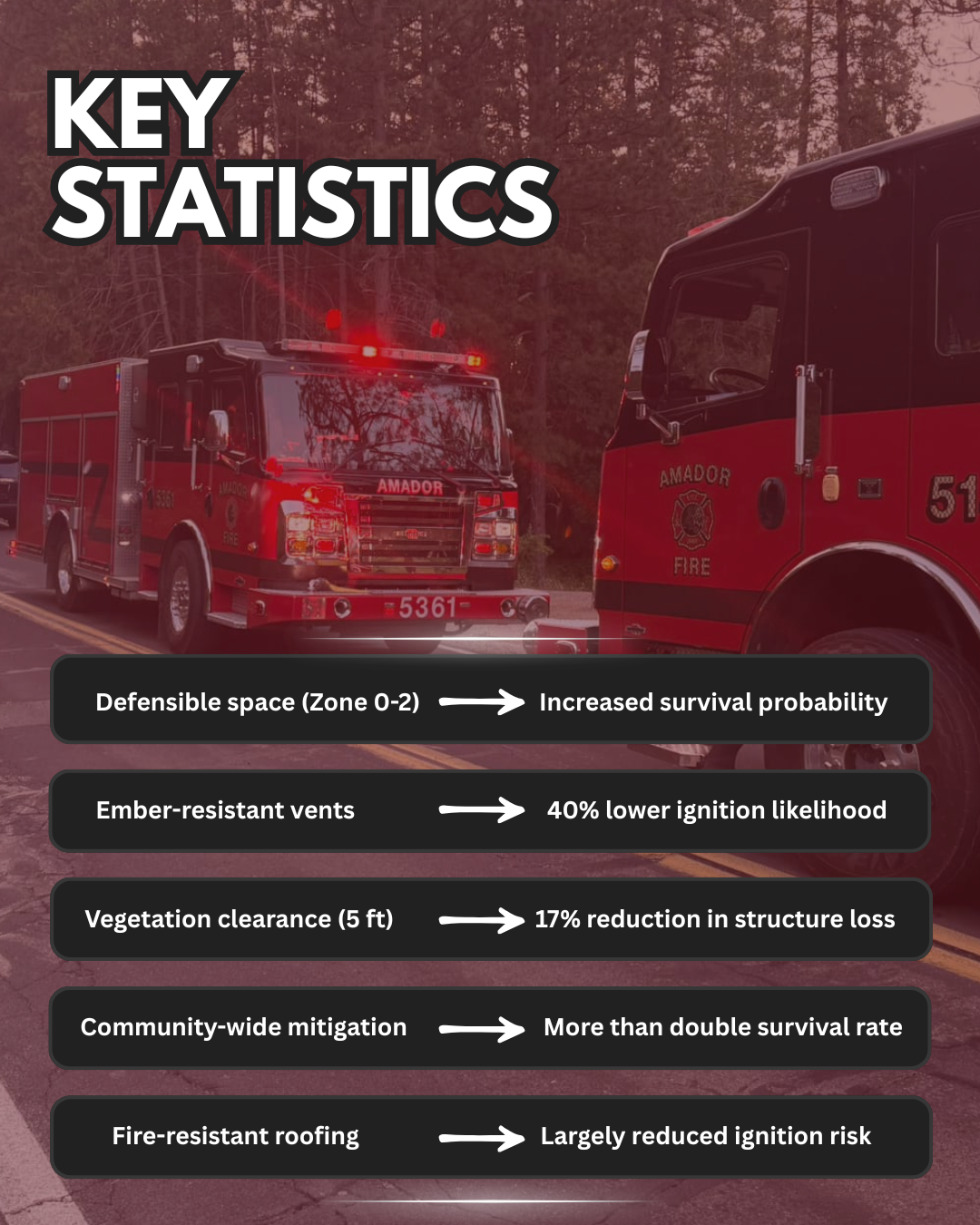
Defensible Space

Zone 0
Extends 5 feet horizontally and vertically from any structure.
- No combustible bark or mulch around structure.
- Remove all dead and dying weeds, grass, plants, shrubs, trees, branches and “vegetative debris”-leaves, needles, cones, bark, etc.
- Remove dead or dry leaves and pine needles from roof and gutters.
- Remove all branches within 10 feet of any chimney, stovepipe and roof.
- Remove or prune flammable plants and shrubs near windows.
- Limit combustible items (outdoor furniture, planters, etc.) on decks.
- Relocate firewood and lumber to Zone 2.
- Consider relocating garbage and recycling containers, boats, RVs, vehicles and other combustible items outside this zone.
Zone 1
Extends from 5 to 30 feet from any structure.
- Remove dead plants, grass and weeds and vegetative debris.
- Trim tree branches to a minimum of 6 feet from the ground.
- Cut or mow annual grass down to a maximum height of 4 inches.
- Create a separation between trees, shrubs and items that could catch fire, such as patio furniture, wood piles, swing sets, etc.
Zone 2
Extends from 30 feet to no less than 100 feet from any structure.
- Cut or mow annual grass down to a maximum height of 4 inches.
- Create spacing between shrubs and trees.
- Reduce “duff”-fallen leaves, needles, twigs, bark, cones, and small branches to a maximum depth of 3 inches.
- All exposed wood piles must have a minimum of 10 feet of clearance, down to bare mineral soil, in all directions.